Christmas Nativity Clipart: Illustrations for Design
As a graphic designer who has spent the last decade refining brand identities and crafting seasonal campaigns for small businesses, I approach every new graphic design asset with a critical eye. It is not enough for an image to be pretty; it must be functional, versatile, and legally safe for commercial use. Recently, I evaluated a collection of Christmas Nativity Clipart for a client project involving a boutique handmade candle line launching a holiday edition. The goal was to create packaging that felt reverent yet modern, avoiding the cluttered aesthetic often associated with traditional holiday graphics.
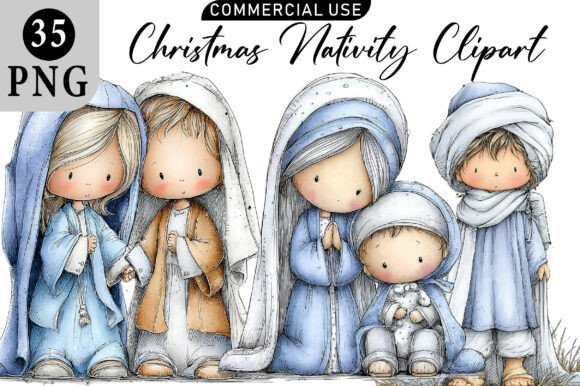
The first impression of this specific set of Illustrations was one of quiet elegance. Unlike the hyper-saturated, cartoonish vectors that flood many creative marketplace listings, these assets possessed a refined line weight and a balanced composition. The mood they created was serene and timeless, fitting perfectly for a brand aiming to evoke warmth and tradition without appearing dated. For designers working on projects that require emotional depth, such as editorial design for church bulletins or high-end greeting cards, this visual tone is invaluable.
Integrating Assets into Real Client Workflows
When considering how Christmas Nativity Clipart performs in real-world scenarios, versatility is key. In my recent project, we utilized these illustrations across multiple touchpoints. For the primary packaging design, the central nativity scene served as the hero graphic on the box lid. Because the lines were clean and distinct, they scaled beautifully from a large format down to the smaller label on the candle jar itself. This scalability is crucial for any digital product intended for physical goods.
Beyond packaging, these assets proved essential for our marketing visuals. We adapted the individual elements for social media graphics, creating a cohesive look for Instagram posts and Pinterest pins. The simplicity of the design allowed us to overlay text easily, maintaining clear visual hierarchy. For clients who use Canva, providing these as part of a Canva template package adds significant value, allowing them to maintain small business branding consistency without needing advanced design skills.
For those in the print-on-demand sector, such as Etsy sellers offering t-shirt design options or sublimation design for mugs, the clarity of these illustrations is a major advantage. When transferred onto fabric or ceramic, complex details can get lost or muddy. However, these clipart files retained their integrity, ensuring the final Etsy product looked professional and polished. Similarly, for Cricut project enthusiasts, the potential for SVG formats means these designs can be cut cleanly for vinyl decals, sticker design, or intricate paper crafts.
Strategic Placement and Visual Impact
Understanding where to place Christmas Nativity Clipart is just as important as selecting it. These illustrations work best in layout areas that allow them to breathe. They serve excellently as decorative accents on minimalist backgrounds, where their symbolic weight can stand out without competition. In web design, using these as subtle background watermarks or footer elements can enhance the seasonal feel of a site without distracting from the core content.
However, there are contexts where caution is required. These assets should be used carefully in crowded layouts or on complex, patterned backgrounds. Low-contrast designs can diminish the impact of fine lines, making the illustration disappear. Furthermore, for corporate materials that demand a strictly secular or ultra-modern aesthetic, traditional nativity imagery may not align with the brand identity. It is vital to assess whether the emotional appeal of the image matches the target audience’s expectations. In professional corporate environments, unless the brand specifically leans into heritage or community values, simpler geometric abstractions might be safer.
The effect on readability and professionalism is significant. When paired with the right typography, these illustrations elevate the perceived value of the design. I found that pairing them with a classic serif font enhanced the traditional feel, while a clean sans serif provided a contemporary contrast. Avoid overly decorative script fonts that might compete with the details of the illustration. The goal is to create a harmonious design bundle where text and image support each other, reinforcing visual trust and audience engagement.
Practical Designer Notes for Commercial Use
Before integrating any commercial design asset into a client deliverable, rigorous testing is non-negotiable. Here are my practical notes for working with this type of illustration:
- Test in Black and White: Always convert the asset to grayscale to ensure the lines hold up without color dependency. This is critical for cost-effective printing and newspaper ads.
- Check Contrast: Preview the clipart on both light and dark backgrounds. Ensure that transparency settings in PNG files are clean, with no white halos around the edges.
- Scale Verification: Zoom in to 400% to check for pixelation if using raster formats. For vector-based SVG design files, ensure paths are closed and nodes are minimized for smooth editing.
- Mockup Integration: Place the design on real product mockups early in the process. Seeing the nativity scene on a actual tote bag or mug reveals spacing issues that flat screens hide.
- Licensing Confirmation: Never assume. Verify the commercial license terms explicitly. Ensure the license covers print-on-demand and digital resale if you are creating templates for others.
- Font Pairing: Experiment with various typefaces. A handwritten font can add warmth, while a display font can add drama. Ensure the font weight does not overpower the delicate lines of the nativity figures.
In conclusion, Christmas Nativity Clipart is more than just a seasonal decoration; it is a powerful tool for storytelling in creative design. When selected and applied with intention, it enhances brand consistency and creates a memorable emotional connection with the audience. Whether you are designing for a local event, a global online product launch, or a personal printable design project, these illustrations offer the flexibility and polish needed for professional results. By respecting the visual hierarchy and adhering to licensing guidelines, designers can leverage these assets to create work that is not only visually stunning but also strategically sound.