Reviewing the 3D Christmas House Ornament Bundle
As a designer who has spent countless hours staring at digitizing software and troubleshooting thread breaks, I approach every new machine embroidery design with a mix of optimism and skepticism. We have all been there: you download a file that looks stunning in the preview, only to find it turns into a bird’s nest of tangled thread on your actual fabric. That is why I took a close, practical look at the 3D Christmas House Ornament Bundle. This isn’t just about whether it looks cute; it is about whether it holds up under the needle when you are trying to run a profitable craft business or create a heirloom-quality personalized gift.
First Impressions and Visual Mood
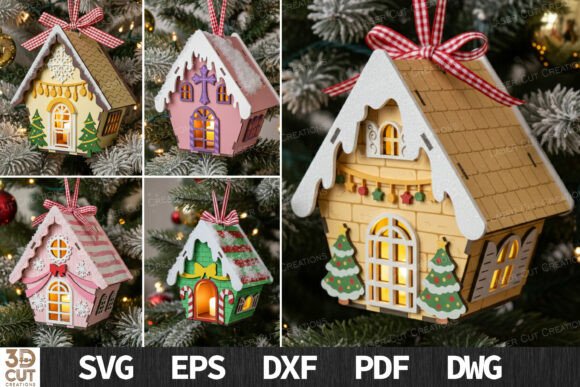
The first thing that strikes you about this bundle is its dimensional ambition. The term "3D" in embroidery usually implies clever layering, puff foam techniques, or strategic use of satin stitch borders to create depth. In this case, the designs lean heavily into a cozy, storybook aesthetic. The houses are not just flat silhouettes; they feature architectural details like chimneys, windows, and rooflines that suggest volume. For a holiday embroidery project, this is crucial. Flat designs can sometimes feel cheap or mass-produced, but these assets have a hand-drawn charm that translates well into stitched form.
The mood is distinctly nostalgic. It feels like something you would find in a high-end boutique rather than a big-box store. This visual personality makes it ideal for customers looking for warmth and tradition. However, from a technical standpoint, complexity is a double-edged sword. More detail means more stops, more trims, and potentially more room for error if your tension isn’t dialed in perfectly.
Real-World Application: The Tote Bag Test
To truly evaluate the 3D Christmas House Ornament Bundle, I imagined a specific real-life scenario: creating a set of custom holiday tote bags for a local farmer’s market. Tote bags are a staple for any Etsy seller because they are low-cost, high-utility, and serve as walking advertisements for your brand. I envisioned placing one of the larger house designs on a heavy canvas bag.
In this context, the design performs remarkably well. The bold lines of the house structure provide enough coverage to look substantial against the textured weave of canvas. When using a fill stitch for the walls and roof, the density needs to be balanced. If it is too dense, the fabric puckers; if it is too light, the background shows through. Based on the visual weight of these designs, they seem calibrated for medium-to-heavy fabrics. The result would be a finished product that feels durable and premium, encouraging buyers to trust your small shop product quality.
Versatility Across Product Lines
Beyond tote bags, where else does this bundle fit? The versatility is one of its strongest selling points for creative entrepreneurs. Consider sweatshirt embroidery. A smaller version of the house, perhaps placed over the heart or on the sleeve, adds a subtle festive touch without overwhelming the garment. Here, the stitch density becomes critical. Sweatshirts are thick, so you need a design that penetrates the pile without causing excessive bulk on the inside, which can irritate the wearer.
For baby embroidery, such as on onesies or bibs, caution is advised. While the theme is adorable, babies have sensitive skin. You must ensure that any satin stitch borders are not too raised or scratchy. Using a soft stabilizer and high-quality rayon or polyester threads can mitigate this. Additionally, these designs could work beautifully as embroidered patch elements. Digitizing them as applique or creating iron-on backing versions could expand your design assets library significantly, allowing you to sell both digital files and physical goods.
Technical Constraints and Fabric Choices
Let’s talk about where things might go wrong. No embroidery file is universal. The 3D Christmas House Ornament Bundle likely contains intricate corners and small details. These are problematic on stretchy fabrics like jersey knits unless you use a cut-away stabilizer and possibly a topping to prevent the stitches from sinking into the fabric texture. Dark fabrics present another challenge. If the design relies on subtle shading, it may get lost on black navy material. Always test your thread colors against your fabric background. A high-contrast combination, like white thread on dark green velvet, often highlights the 3D effect better than low-contrast pairings.
Curved surfaces, such as caps, require careful hoop placement. The rigid structure of a house design might distort if stitched over the curved panel of a baseball cap. It is best suited for flat panels or structured fronts. Also, be mindful of hoop size. Ensure the design fits comfortably within your machine’s maximum area with enough margin for clamping. Crashing into the hoop edge is a costly mistake in terms of both time and materials.
Commercial Viability and Brand Consistency
For those running a commercial embroidery operation, consistency is key. This bundle offers a cohesive look that can help build brand recognition. If you are selling digital embroidery file packs, providing high-quality printable mockup images is essential. Show potential buyers how the design looks on a pillow cover, a kitchen towel, and a shirt. This helps them visualize the end use and increases conversion rates.
Customer trust is built on reliability. If a buyer purchases a custom apparel item from you, they expect the stitching to last through washes. Dense areas in the roof or chimney of the house design should be checked for pull compensation. If the digits have accounted for fabric pull, the design will remain crisp after laundering. This attention to detail separates amateur hobbyists from professional apparel decorators.
Practical Designer Notes
Before you commit to a large production run, follow these steps:
- Test on scrap fabric: Never stitch directly on your final product. Use the same type of fabric and stabilizer you plan to use for the sale item.
- Check thread contrast: View your design in black and white on your screen. If the details disappear, you may need to adjust your color palette or choose a different fabric.
- Review stitch density: Look at the property bar in your software. If the density seems excessively high for lightweight fabric, consider resizing or adjusting settings if you have the editing software.
- Confirm licensing: Always read the license agreement. Some bundles allow unlimited physical sales but restrict the resale of the digital file itself. Clarify this before listing on Etsy or other platforms.
- Inspect small details: Zoom in on the windows and doors. Are there tiny jump stitches that might snag? Trim them carefully during production.
The 3D Christmas House Ornament Bundle sits comfortably in the Winter Amp category of seasonal decor, offering a blend of charm and technical substance. It is not just a pretty picture; it is a functional asset for makers who understand the nuances of thread and fabric. Whether you are creating a holiday gift for family or stocking your online store with festive tote bag design options, this bundle provides a solid foundation. Just remember that the magic happens in the execution. Proper stabilization, quality thread, and careful testing will ensure that your embroidery project shines as brightly in person as it does on the screen.